Water Damage in Wilmington: Start Here
A burst supply line. A failed water heater. A storm that pushes water under a back door. The source changes, but the job order does not: stop the water, remove it, then dry the structure.
Remainingadopted Restoration is a referral service. We do not do the work. We connect homeowners in the Cape Fear area with independent local providers who handle water damage restoration, water extraction and structural drying.
Why use a referral at all? Because searching in a panic goes badly. Tabs pile up, ads blur together, and it is hard to tell a working restoration provider from a lead reseller. Here you get a short path to a provider in our network, plus a clear list of questions for when you are talking to them.
Timing matters. Wet drywall, soaked insulation and damp subfloors can begin growing mold within a couple of days in humid weather. Many providers can respond quickly, but availability varies by provider and by the day.
Request a callback to check provider availability for your address.
Then use the rest of this page to size up whoever answers.
How It Works
What Remainingadopted Restoration does
You describe what happened. Your request goes to an independent provider in our network that serves Wilmington. The provider contacts you, assesses the damage and gives you an estimate. Remainingadopted Restoration does not perform, supervise or price the work. Your agreement is with the provider.
Questions to ask before anyone starts
Ask these in the first conversation. Good answers are specific.
- Are you licensed and insured for this work in North Carolina? A solid answer names the type of coverage and offers proof. Verify it yourself.
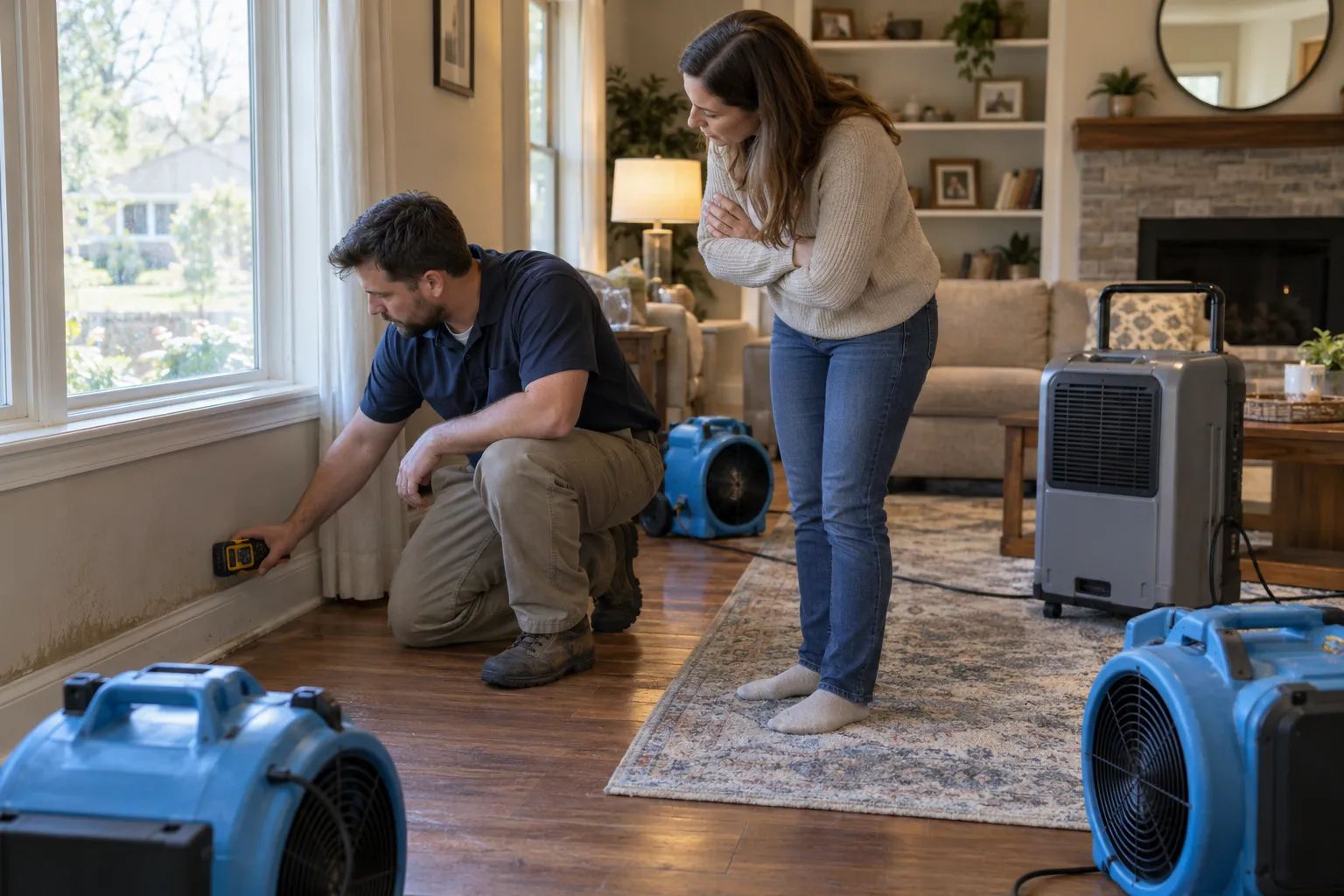
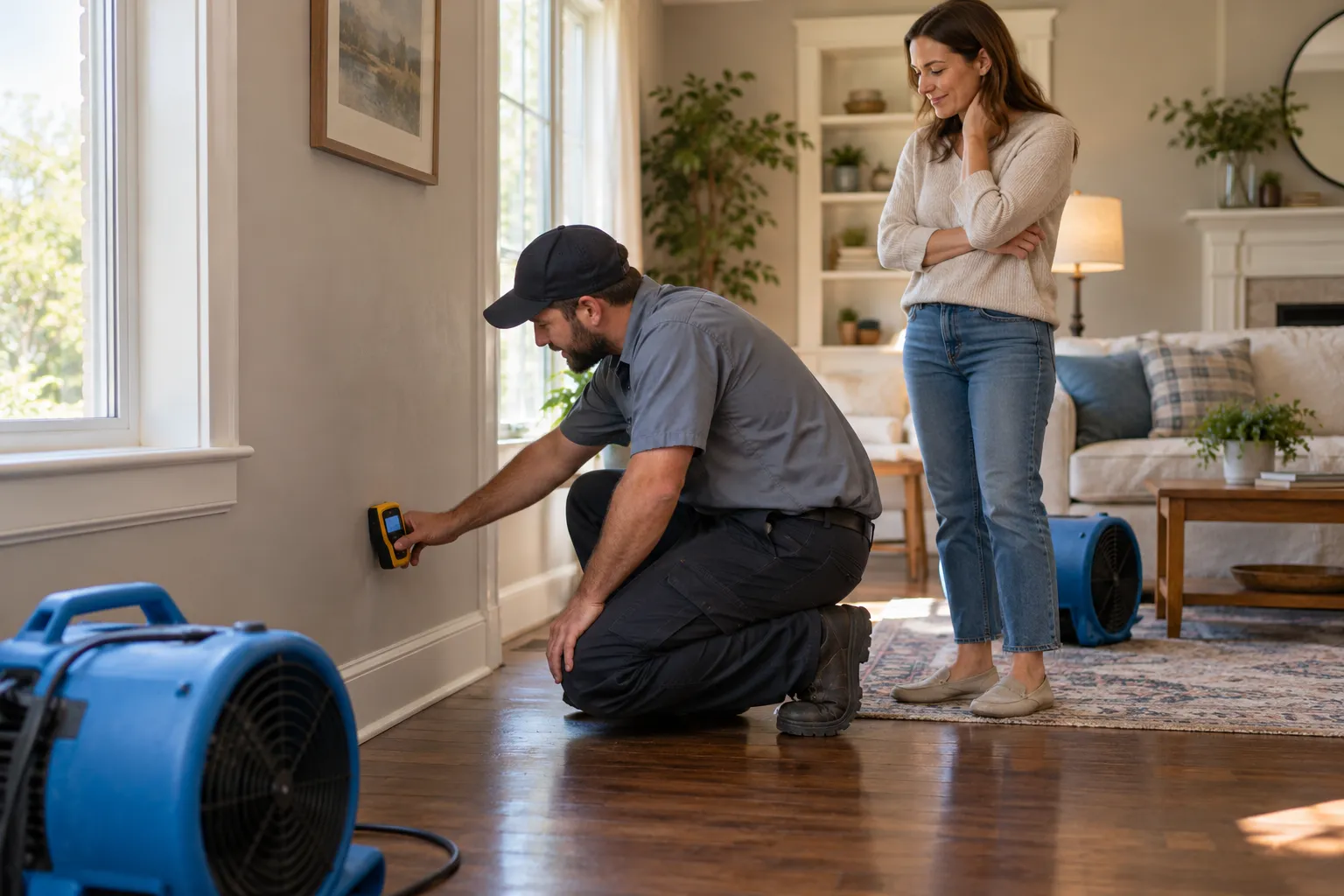
- What will you measure, and how? Look for moisture meters and readings taken at the start and at every visit.
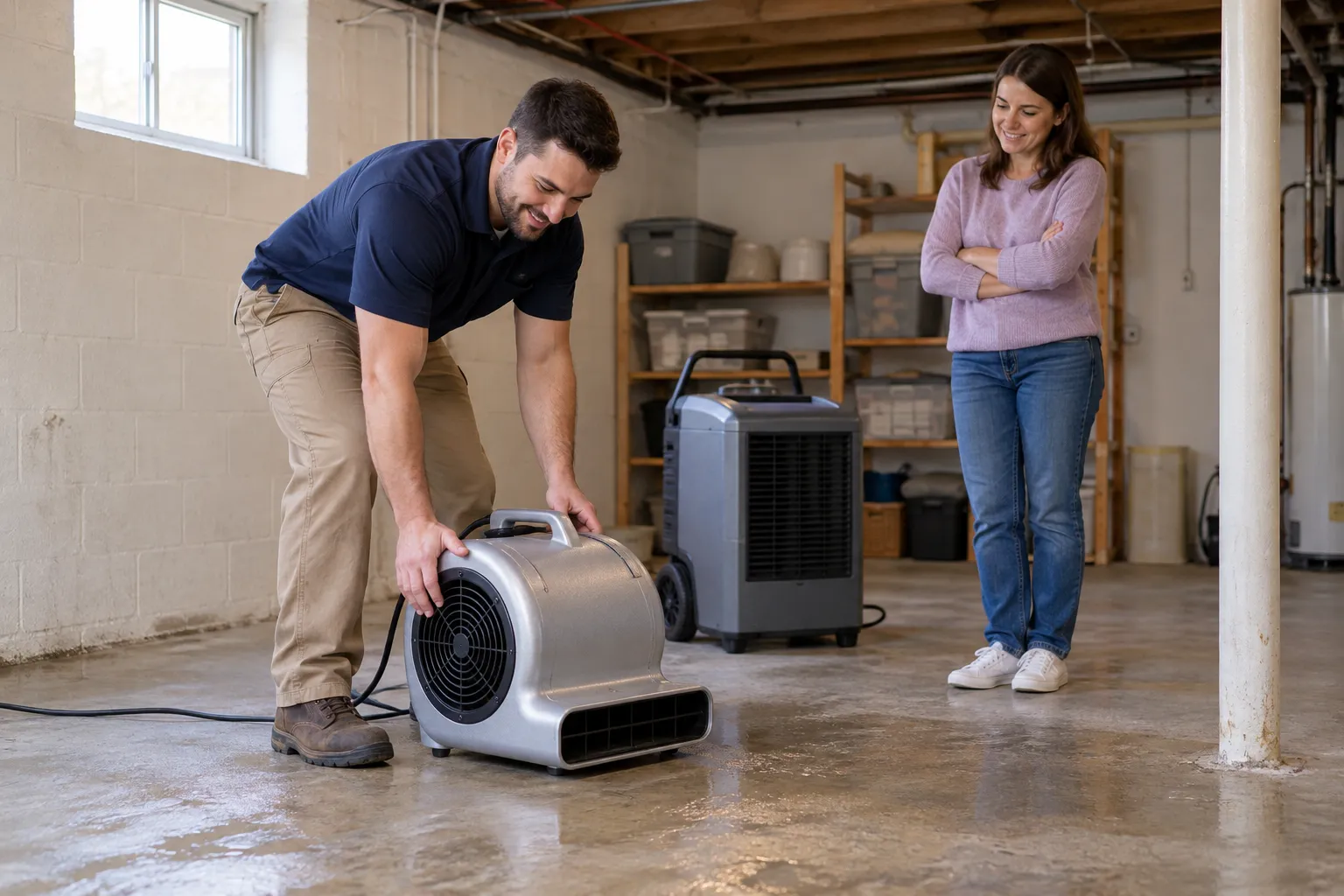
- What equipment goes in, and for how long? Expect air movers and dehumidifiers with a rough drying timeline, not a vague "a few days."
- Will the estimate be in writing? It should be itemized and delivered before work begins.
- Can you help document the damage for a claim? Providers can often supply photos and moisture logs. Your policy decides what is paid.
Red flags
- Pressure to sign on the spot
- A firm price with no site visit
- No readings, only "it looks dry"
- A large cash deposit demanded up front
- Reluctance to put scope and price on paper
Why local knowledge matters
Hot, humid summers keep crawl spaces damp, and slab homes can wick moisture from below. A local provider knows how houses here get wet and where the moisture hides.
Where Providers Serve Homeowners
Remainingadopted Restoration routes requests across Wilmington and the surrounding communities in the Cape Fear area. Providers in our network cover different parts of that map, so the match depends on your address and the type of job.
That matters in a region with both older mill-era houses and newer subdivisions. A provider who works on both knows the difference. Older homes may have plaster walls, original flooring and tight crawl spaces. Newer builds often sit on slabs, with engineered flooring and wall cavities packed with insulation. Each dries differently.
Tell the provider your foundation type, your siding and which rooms are wet. It helps them plan equipment and give a tighter estimate.
Coverage varies by provider, and not every provider serves every street. If the first one cannot reach you, say so and ask who they would suggest.
Ready to see who serves your address? Describe what happened and request an estimate.
Local Homes, Local Water Problems
Humid summers, slow drying
Long, hot, humid stretches keep indoor air heavy. Wet materials dry slowly and mold gets a foothold fast. Providers often run dehumidifiers longer in this climate.
Thunderstorms and tropical remnants
Heavy rain can push water through foundation walls, window wells and low doorways. After a tropical system passes, many homeowners reach out at once, so availability can tighten. Ask early.
Ice storms
A hard freeze can split a pipe or pull down a gutter. The water often shows up when things thaw. If you see a leak, shut off the main valve and note where it started.
Crawl spaces and slabs
Crawl spaces trap moisture and hide leaks for weeks. In slab homes, a leaking line under the floor may show as warm spots or an odd water bill. Ask any provider how they will check the areas you cannot see.
Brick, vinyl and what hides behind them
Siding conceals water paths. Water can run behind vinyl, and brick can wick moisture upward. A moisture meter finds what the eye misses.
First steps while you wait
- Stop the source and shut off the main valve if needed.
- Turn off power to wet areas only if it is safe to do so.
- Lift small items and furniture off wet carpet.
- Take photos and video before any cleanup.
What it typically costs
Typical U.S. ranges vary widely by job. A small extraction and drying job may run from several hundred to a few thousand dollars. Larger or contaminated losses can go well beyond that. Get a written quote that lists the scope.
Insurance basics
Some policies may cover sudden damage; check your policy. Providers can often help document damage for a claim. Coverage decisions belong to your insurance company, so ask your insurer what your policy includes.
Request Help Today
Tell us what happened, where the water is and when it started. Remainingadopted Restoration passes your details to an independent provider in our network. You can also email contact@remainingadopted.garden.
Request a callback to ask about provider availability, or send a request and compare the estimate you receive.